


Honeyguides
Olin, North Carolina
If you heard that a human and another animal were working together, you might not be surprised. After all, tens of millions of people have pets in the United States alone, many of which have been taught commands. However, the greater honeyguide, or Indicator indicator, is a unique case. These birds, named after their habit of leading humans to beehives, have, unlike most other animals, learned to collaborate with humans without being domesticated or trained.
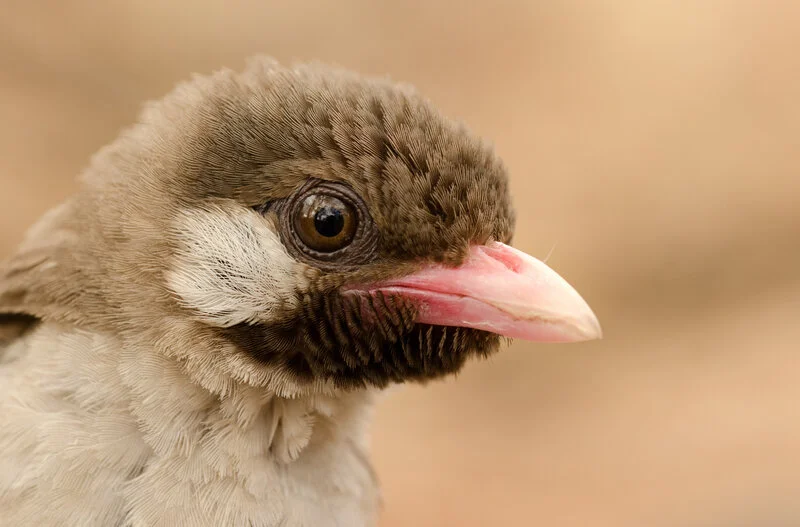
Greater honeyguides, which live throughout sub-Saharan Africa, are known to collaborate with multiple different cultural groups in the area, including the Boran, Yao, Hadza, and Awer peoples, each of which has their own ways of getting the attention of honeyguides. Interestingly, research has shown that honeyguides are more likely to respond to the sounds used by populations that live in their area compared to sounds used by other populations in other areas, indicating that honeyguides are not inherently attracted to any of the sounds and have instead learned to recognize the specific sounds made by honey-hunters local to them.

When a honey-hunter wants a honeyguide to lead him to honey, he starts by making the noise most commonly used in his local area. The knowledge of these noises and how to make them is commonly passed down from father to son or from a community elder to a younger person. Some cultures vocalize to catch the attention of honeyguides, while others use instruments of sorts, including using fruits, shells, and man-made items as horns. If a honeyguide is receptive to the calls of a honey-hunter, it will respond with a noise, and the honey-hunter will change to a different sound from the one he used to initially contact the bird. The two will communicate back and forth until the honeyguide reaches the beehive, when it falls silent, signaling to the honey-hunter that it is time to make his move. Smoke is commonly used to subdue the bees, and then a honey-hunter might pull the hive out of the trunk, climb the tree, or cut the entire tree down depending on the location of the beehive and the preference of the honey-hunter.
Honey itself can be dangerous for birds to eat, and honey can be a major source of food or income for honey-hunting cultures, so honey-hunters only leave honeyguides the other bee products, like wax and brood. The fact that honeyguides are able to not only digest wax, but have a wax-based diet, is rare for birds. It used to be theorized that these birds had a symbiotic relationship with microorganisms in their digestive tract that could assist in the digestion of wax, but that hypothesis is rejected by the majority of scientists today. After observing the contents of the honeyguides’ stomachs, it has been determined that honeyguides have the unique quality of being able to digest wax due to the presence of specialized enzymes in their digestive systems, including lipase.
Despite the fact that honeyguides are mostly known for their relationship with humans, they have been documented to have a similar relationship with honeybadgers and baboons, leading the mammals to beehives so that the wax will be exposed for them to eat. Bee stings, especially in large quantities, can be fatal to honeyguides, so this arrangement is far safer for the birds. Although honeyguides live solitary lives for the most part, many of them will gather in one place once a beehive is exposed.
Another interesting fact about honeyguides is that they are brood parasites. The reason that honeyguides never meet their parents is because female honeyguides will lay their eggs in the nests of other species of birds, where the young honeyguide will be raised by host parents who are unaware that the egg is not theirs. Some of the birds that are commonly parasitized by honeyguides are starlings, bee-eaters, barbets, and kingfishers. Prior to laying an egg, a female honeyguide will use its beak to

puncture all other eggs in the nest, often preventing the survival of any of the host parents’ own offspring, meaning that the honeyguide chick will get all of the time and resources that would have gone to taking care of the other chicks. The honeyguide chick is born with very sharp hooks on its beak, which it will use to kill any of its foster siblings that hatch--if there are any chicks that survive the mother’s actions. Over a month later, when the honeyguide chick leaves its nest, the hooks are no longer present. Since honeyguides are not raised by their parents, the process of honey-hunting is thought to be learned whenever a young honeyguide observes another honeyguide communicating with other creatures and then getting wax.
Interestingly, the behavior of honeyguides collaborating with other animals could be even older than our own species! All of the factors of this relationship (bees, honeyguides, intelligent mammals, and methods to subdue bees) have been present together for hundreds of thousands of years. However, this long-lasting relationship is now being threatened. Some honey-hunters have reported that the areas that they would typically hunt in are now protected from human interference by the local government. This situation highlights the importance of considering the needs of minority populations, and the environment, when making complex decisions that affect the lives of many.
Works Cited
Ahmad, H. I., Ahmad, M. J., Jabbir, F., Ahmar, S., Ahmad, N., Elokil, A. A., & Chen, J. (2020). The Domestication Makeup: Evolution, Survival, and Challenges. In Frontiers in Ecology and Evolution (Vol. 8). Frontiers Media SA. https://doi.org/10.3389/fevo.2020.00103
Downs, C. T., van Dyk, R. J., & Iji, P. (2002). Wax digestion by the lesser honeyguide Indicator minor. In Comparative Biochemistry and Physiology Part A: Molecular & Integrative Physiology (Vol. 133, Issue 1, pp. 125–134). Elsevier BV. https://doi.org/10.1016/s1095-6433(02)00130-7
Garget, J. (2023). Successful honey-hunters know how to communicate with wild birds. In www.cam.ac.uk. University of Cambridge. https://www.cam.ac.uk/stories/human-honeyguide-communication
Giaimo, C. (2024). Helpful Honeyguides Have a Long and Sweet Alliance With Humans. In Atlas Obscura. https://www.atlasobscura.com/articles/wild-life-excerpt-honeyguides
Greenfieldboyce, N. (2023). Looking for honey? This African bird will heed your call and take you there. In NPR. https://www.npr.org/sections/goatsandsoda/2023/12/07/1217800692/african-honeyguide-bird-calls-honey-human-cultural-evolution
Greenfieldboyce, N. (2024). This wild African bird comes when it’s called—and then leads you to honey. In NPR. https://www.npr.org/2024/01/22/1198909197/wild-african-honeyguide-bird-honey-human-cultural-evolution
Honeyguides as Brood Parasites. (n.d.). In African Cuckoos. Retrieved August 26, 2025, from https://www.africancuckoos.com/study-systems/honeyguides-as-brood-parasites
Isack, H. A. (n.d.). Isack: Co-operative honey-hunting between man and honeyguide. In www.internationalornithology.org. Retrieved August 19, 2025, from https://www.internationalornithology.org/PROCEEDINGS_Durban/Symposium/S23/S23.4.htm
Martin, K. (2011). Indicator indicator (greater honeyguide). In Animal Diversity Web. Animal Diversity Web. https://animaldiversity.org/accounts/Indicator_indicator
Meet the greater honeyguide. (2024). In Caitlyn Finton, PhD. https://caitlynfinton.com/2024/01/26/meet-the-greater-honeyguide
Saha, P., & Spottiswoode, C. (2016). Meet the Greater Honeyguide, the Bird That Understands Humans. Audubon. https://www.audubon.org/magazine/meet-greater-honeyguide-bird-understands-humans
Spottiswoode, C. N., Lund, J., & Lloyd-Jones, D. J. (2022). Honeyguides. In Current Biology (Vol. 32, Issue 20, pp. R1072–R1074). Elsevier BV. https://doi.org/10.1016/j.cub.2022.08.076
van der Wal, J. E. M., Gedi, I. I., & Spottiswoode, C. N. (2022). Awer Honey-Hunting Culture With Greater Honeyguides in Coastal Kenya. In Frontiers in Conservation Science (Vol. 2). Frontiers Media SA. https://doi.org/10.3389/fcosc.2021.727479
Wood, B. M., Pontzer, H., Raichlen, D. A., & Marlowe, F. W. (2014). Mutualism and manipulation in Hadza–honeyguide interactions. In Evolution and Human Behavior (Vol. 35, Issue 6, pp. 540–546). Elsevier BV. https://doi.org/10.1016/j.evolhumbehav.2014.07.007
Check out some STEM⋅E events!
Tell us what interests you! Drop suggestions to read about your favorite STEM topics!


Comments